Hello, welcome to the official website of Zhan Yao Spraying!

Customer service hotline
+86 185 3326 7656
WeChat:+8618533267656
Mobile:+86 185 3326 7656
Whatsapp:+8618533267656
Email:info@powder-coatingline.com
Address:No. 55, Airport Road, Changshou Street, Xinle City, Shijiazhuang, Hebei Province
Powder coating defects are often blamed on the powder, spray guns, or curing oven. However, many problems begin before the workpiece reaches the spray booth.
Oil, rust, chemical residues, and moisture can remain on the metal surface after pretreatment. These contaminants may interfere with coating adhesion or reduce corrosion protection, even when the finished surface initially looks acceptable.
The important point is that pretreatment is not simply a washing process. Each stage must prepare the surface for the next one. When one stage is ineffective, the problem can continue through the entire coating process.
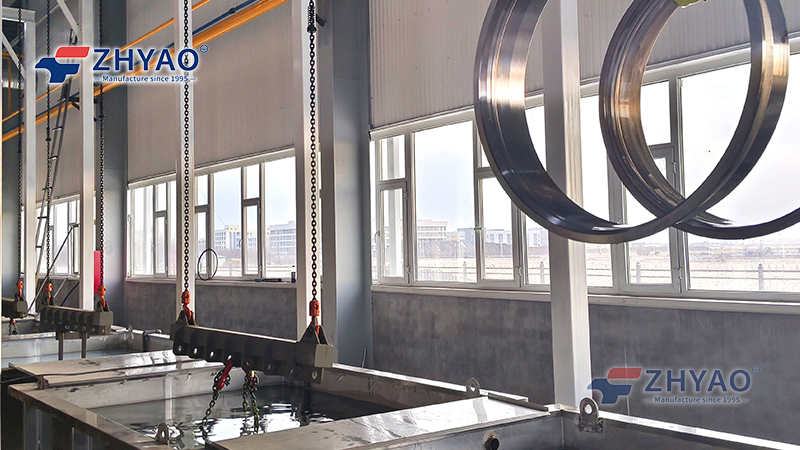
Oil, grease, machining fluids, drawing compounds, and fingerprints can prevent powder coating from bonding properly to the metal.
A workpiece may appear clean after washing, but visible cleanliness does not always mean that all contaminants have been removed.
Common causes include:
Insufficient cleaning time.
Incorrect chemical concentration or bath temperature.
Contaminated cleaning solution.
Poor spray coverage.
Blocked or misaligned nozzles.
If cleaning is incomplete, the subsequent conversion treatment may also become uneven because the chemicals cannot react properly with the contaminated surface.
When adhesion problems occur, check the cleaning stage first. Verify the chemical conditions, nozzle performance, and bath cleanliness before making changes to the powder coating process. The Powder Coating Institute also identifies cleaning efficiency as a key starting point in pretreatment troubleshooting.
Different metals do not respond to the same pretreatment process in the same way.
Carbon steel, galvanized steel, and aluminum have different surface characteristics. A chemical treatment suitable for one material may be ineffective or inappropriate for another.
For example:
Carbon steel: Rust, mill scale, and surface contamination may need to be removed before chemical conversion.
Galvanized steel: The treatment must prepare the zinc surface without unnecessarily damaging the protective zinc layer.
Aluminum: Cleaning and conversion chemistry must be compatible with the aluminum alloy and its surface condition.
Using an unsuitable treatment can lead to poor adhesion, uneven conversion coating, or inadequate corrosion resistance.
The pretreatment process should therefore be selected according to the substrate, coating system, and required service environment—not simply according to the equipment already installed.
A pretreatment chemical may be correctly prepared, but the workpiece may not receive uniform treatment.
This can happen when spray nozzles are blocked, spray pressure is insufficient, or the workpiece is positioned in a way that prevents chemicals from reaching certain areas.
Complex structures are particularly vulnerable. Welded frames, recessed sections, overlapping panels, and hollow components may have areas that receive less spray or retain liquid after treatment.
An uneven conversion coating can reduce the consistency of corrosion protection.
When investigating this problem, check the actual spray pattern and workpiece position. Do not rely only on the chemical concentration displayed by the control system.
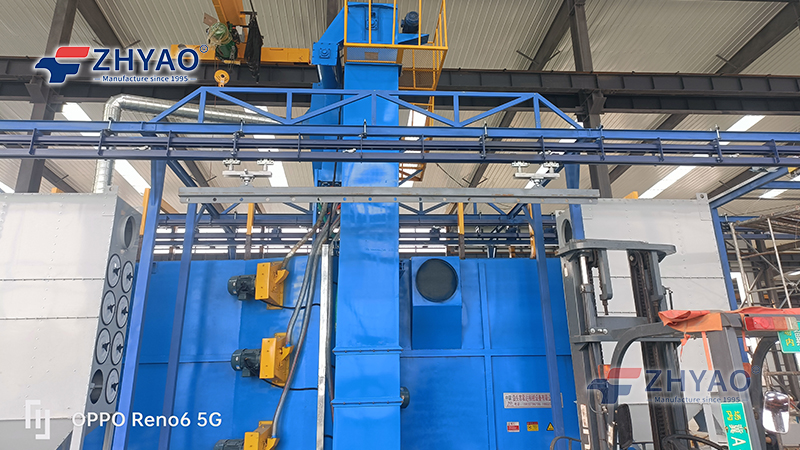
Rinsing removes residual chemicals and contaminants from the workpiece before it enters the next treatment stage.
If rinsing is insufficient, chemicals from one stage may be carried into the next tank. This can gradually change the condition of the treatment bath and affect the quality of the conversion coating.
Poor final rinsing may also leave soluble residues on the metal surface. These deposits can affect adhesion and corrosion performance.
Common causes include:
Insufficient rinse water flow.
Contaminated rinse tanks.
Poor drainage between stages.
Incorrect workpiece orientation.
Inadequate final rinse water quality.
The quality of the final rinse deserves particular attention because it is the last liquid that contacts the surface before drying. Contaminated rinse water can leave deposits that reduce coating performance.
Flash rust is a thin layer of rust that forms on steel after cleaning or rinsing, often while the surface is still wet.
It may appear when cleaned steel remains exposed to moisture and air before drying or coating.
Possible contributing factors include:
Delayed drying after rinsing.
Excessive moisture on the workpiece.
Poor drainage from seams or recessed areas.
Unsuitable process conditions for the substrate.
Delays between pretreatment and powder application.
Flash rust should not be treated as a minor cosmetic issue. It indicates that the prepared surface has changed before coating.
If rust appears after pretreatment, inspect the transfer time, drying conditions, and workpiece drainage. The correct response depends on the extent of rust and the coating specification; simply spraying powder over the affected surface does not correct the underlying problem.
A workpiece can appear dry while still retaining water inside seams, hollow sections, or recessed areas.
This is especially relevant for tubular structures, welded frames, and parts with overlapping surfaces.
When retained moisture reaches the powder coating or curing stage, it may contribute to defects such as blistering or pinholes. However, these defects can also have other causes, including contamination, outgassing, or curing conditions.
To investigate, check:
Whether the workpiece drains completely after rinsing.
Whether hollow sections have suitable drainage openings.
Whether the drying time is sufficient for the actual part geometry.
Whether the conveyor speed and loading arrangement allow adequate drying.
Increasing oven temperature alone may not solve the problem if water is trapped in a location where airflow cannot remove it effectively.
Even when pretreatment is completed correctly, the surface can become contaminated before powder application.
Common sources include dirty conveyor hooks, workshop dust, oil from handling, and contact with unclean surfaces.
Bare-hand contact can also transfer oils and salts to the prepared metal.
After pretreatment, workpieces should be handled with suitable clean equipment and protected from unnecessary contact, dust, and moisture. The time between pretreatment and coating should also be controlled according to the process requirements.
A good pretreatment system can still produce inconsistent results if the workpieces are recontaminated before spraying.
When a coating defect appears, do not immediately adjust the spray guns or curing oven.
Start by identifying the defect and checking the process stages in order.
What you find | What to check |
|---|---|
Poor adhesion or peeling | Degreasing, substrate condition, conversion treatment, curing |
Corrosion beneath the coating | Surface preparation, conversion coating, final rinse, coating system |
Uneven or patchy appearance | Spray coverage, bath condition, drainage, chemical treatment |
Flash rust | Rinse conditions, drying delay, moisture exposure |
Blisters or pinholes | Trapped moisture, contamination, outgassing, curing conditions |
Different results between batches | Bath concentration, temperature, cleaning efficiency, rinse water quality |
These symptoms are not unique to pretreatment. For example, poor adhesion can also result from incorrect curing, while pinholes may be associated with outgassing or powder application conditions.
A useful troubleshooting method is to compare a representative production part with a properly prepared test panel. If the test panel performs well but production parts fail, investigate workpiece geometry, contamination, drainage, and handling.
For demanding applications, coating adhesion and corrosion resistance should be verified using the relevant test methods and agreed acceptance criteria rather than relying only on visual inspection.
Can poor pretreatment cause powder coating to peel off?
Yes. Oil, rust, chemical residues, or an unsuitable conversion treatment can interfere with adhesion. However, curing conditions and coating compatibility should also be checked before identifying pretreatment as the only cause.
How can I tell whether a powder coating defect comes from pretreatment?
Inspect the substrate and pretreatment stages, including cleaning, chemical treatment, rinsing, drying, and handling. Compare defective production parts with properly prepared test panels and verify the result through suitable adhesion or corrosion testing.
What do you think of this article?
Copyright @ Hebei Zhanyao Intelligent Equipment Technology Co., Ltd. All Rights Reserved Record number:
Service Hotline


